
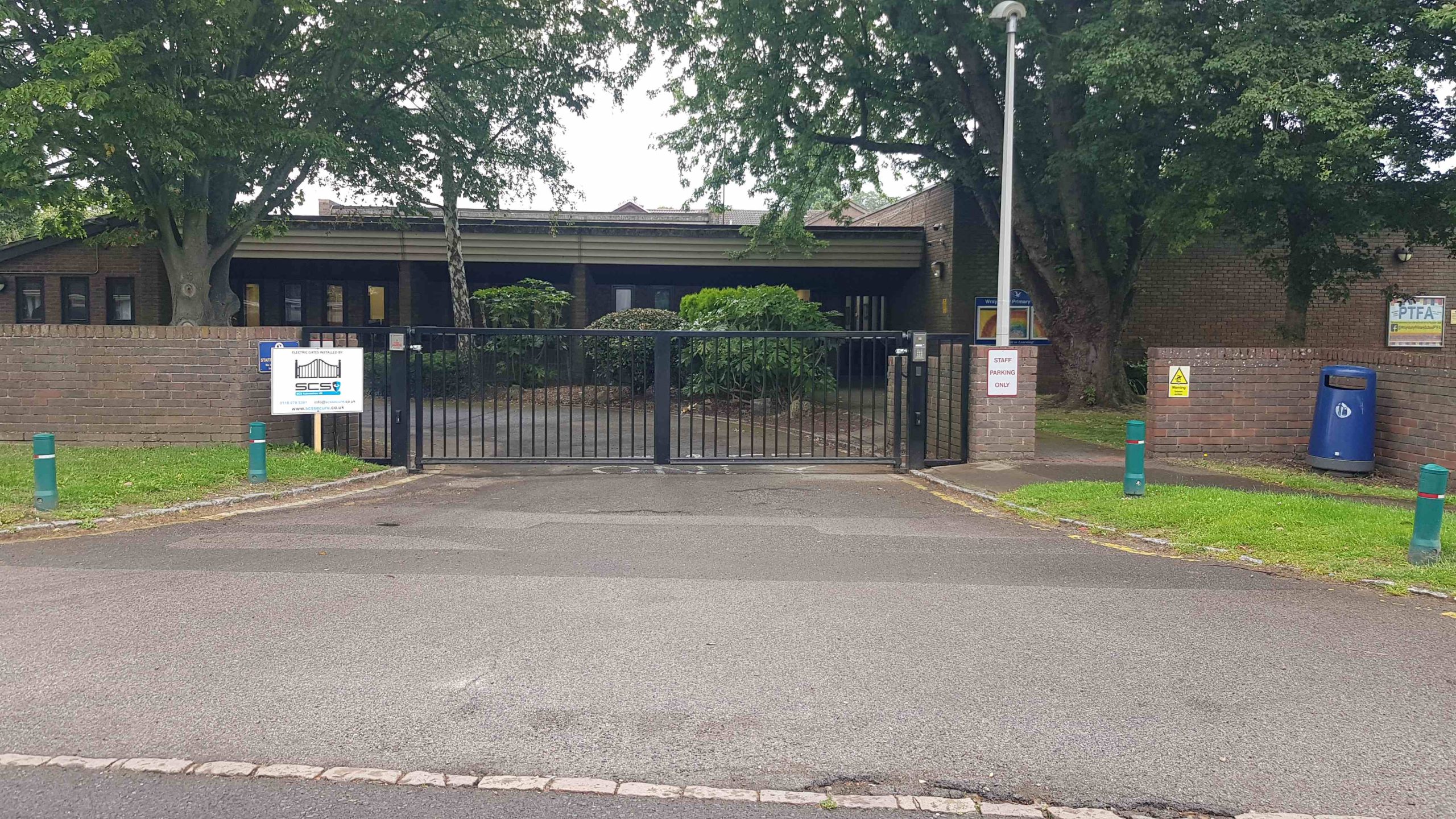

Metal swing gate installation

Swing vs Sliding vs Bifold Gates: Which Is Best for You?

Max Smith Picture

Max Smith

28th April 2026

Swing, sliding and bifold gates each suit different spaces and site conditions. Swing gates are often best for wide, level driveways, sliding gates work well where space is limited, and bifold gates are ideal for tighter entrances or sites with restricted depth. The best choice depends on your available space, ground conditions, traffic flow, and how you want the gate to operate day to day.

Choosing the right automated gate is about more than appearance. It affects security, convenience, safety, and how efficiently vehicles and people can move in and out of your site. A gate that suits one property perfectly may be completely unsuitable for another. That is why it is important to understand how each gate type works before making a decision.

Whether you are securing a commercial premises, industrial site, school, residential development, or private entrance, understanding the differences between swing gates, sliding gates, and bifold gates will help you choose a system that matches both your space and your security needs.

Overview of Automated Gate Types

Automated gates are designed to control access while improving convenience and security. Unlike manual gates, they open and close using motors and access systems such as keypads, fobs, intercoms, mobile controls, or vehicle detection systems.

The three most common types of automated gates are swing gates, sliding gates, and bifold gates. Each has its own strengths, limitations, and ideal use cases.

Swing gates open inwards or outwards on hinges, much like a traditional door. They are popular for properties with enough clear space for the gate leaves to open fully.

Sliding gates move horizontally along a track or cantilever system. Rather than swinging open, they slide to one side, making them suitable for sites where driveway depth is limited.

Bifold gates use hinged panels that fold in on themselves as they open. This allows them to operate quickly and in tighter areas where a full swing or slide may not be practical.

The right choice depends on factors such as driveway layout, gradient, width, available run back space, traffic levels, and the visual style you want for the entrance. If you are comparing options for a secure entrance, SCS Secure can help assess the most suitable solution for your site through professionally designed swing gates and other automated gate systems.

Swing Gates: Pros and Cons

Swing gates are one of the most familiar and widely used gate types. They are typically made as single leaf or double leaf gates and open inwards or outwards from hinge posts.

One of the biggest advantages of swing gates is their appearance. They often provide a more traditional and elegant entrance, which makes them popular for residential properties, schools, private estates, and certain commercial settings. They can also be simpler in design compared with more mechanically complex systems.

Swing gates can work very well on wide, level entrances where there is enough clearance for the gate leaves to open safely. In many cases, they create a clean and attractive finish that suits both modern and traditional properties.

However, swing gates are not suitable for every site. They need sufficient space in front of or behind the gate path, depending on the direction of opening. If there are parked vehicles, steep gradients, uneven ground, or restricted driveway depth, swing gates can become impractical.

They may also open more slowly than other gate types, especially where larger leaves are involved. Wind resistance can be another consideration for exposed locations, particularly with solid gate designs.

Pros of swing gates

They offer a classic appearance that suits many properties

They can be ideal for wide and level entrances

They are available in a wide range of styles and finishes

They can work well for residential and lower traffic commercial sites

Cons of swing gates

They require clear opening space

They are less suitable for sloped or uneven driveways

They can be affected more by wind loading

They may not be the best option for tight approaches or high frequency entry points

For sites with the right layout, swing gates can provide a secure and attractive entrance solution.
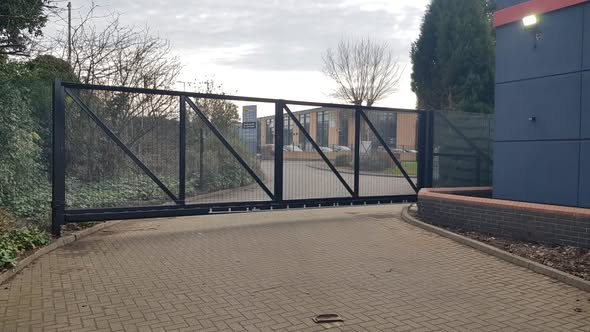
    Metal sliding gate
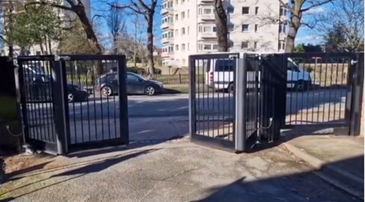
    bifold metal gate

    Sliding Gates: Pros and Cons

    Sliding gates are often the preferred option where space is tighter or where swing gates are not practical. Instead of opening into the driveway, the gate moves sideways along the fence line or boundary.

    This makes sliding gates particularly useful for sites with shorter driveways, limited internal depth, or areas where vehicles need to stop close to the gate line. Because the gate does not swing outward or inward, there is less risk of conflict with parked vehicles or awkward approach angles.

    Sliding gates are also well suited to commercial and industrial environments where security, durability, and controlled access are priorities. They are often seen on warehouses, business parks, schools, service yards, and high security sites because they can be robust and reliable in regular use.

    Another key advantage is that sliding gates tend to work better on sloping driveways, provided the design and installation have been planned correctly. Since the gate moves laterally rather than swinging across the ground, gradient issues are often easier to manage.

    That said, sliding gates do need enough run back space to one side of the entrance. If there is no room for the gate to slide fully open, this option may not be possible. Track systems also need proper installation and maintenance to ensure smooth operation, especially in outdoor environments where debris can build up.

    Pros of sliding gates

    They are excellent for limited driveway depth

    They suit commercial and higher security sites well

    They work well where vehicles stop close to the entrance

    They are often more suitable than swing gates for sloped approaches

    Cons of sliding gates

    They require side room for the gate to retract

    Track systems need maintenance and should be kept clear

    Installation can be more complex depending on the site

    They may not suit every aesthetic preference

    Where space is restricted but side clearance is available, sliding gates can provide a secure and efficient access solution.


    Bifold Gates: Pros and Cons

    Bifold gates are designed to fold in sections as they open, which allows them to operate in areas where both swing and sliding gates may face limitations. Because the gate panels fold back on themselves, they need less opening depth than swing gates and less side run back than sliding gates.

    This makes bifold gates especially useful for tight urban sites, commercial entrances with limited space, and locations where speed of operation is important. In many cases, bifold gates open faster than standard swing or sliding systems, which can help reduce waiting times for vehicles entering or leaving the site.

    They are often used for commercial premises, car parks, depots, schools, and sites where space efficiency is a key consideration. Bifold gates can be practical where the driveway rises quickly from the entrance or where there is simply not enough room for another gate type to function effectively.

    However, bifold gates can involve more moving parts and more complex mechanisms than simpler swing gates. This means design, installation, and maintenance all need to be handled carefully. For some properties, the appearance may also feel more functional than decorative, depending on the style selected.

    Pros of bifold gates

    They are ideal for tight entrances and restricted spaces

    They can open quickly, which is useful for frequent access

    They need less space than full swing gates

    They can work well on sites with challenging approach conditions

    Cons of bifold gates

    They may involve more complex mechanical components

    They can require more detailed maintenance over time

    They may be more expensive to install in some cases

    They may feel more commercial in appearance depending on the design

    For sites where space is at a premium, bifold gates can offer an effective balance between security and practicality.


    Which Gate Type Fits Your Site?

    The best automated gate for your site depends on how your entrance actually functions in real life. A gate should not only fit the opening, but also suit the way vehicles approach, the surrounding ground conditions, the traffic volume, and the level of security required.

    If your entrance is wide, level, and has enough clear space for the gate leaves to open fully, swing gates may be an excellent option. They are often chosen where appearance matters and where the site layout supports a traditional opening style.

    If your driveway is shorter or you need to avoid the gate opening into the access route, sliding gates are often the better solution. They are particularly effective where side space is available and where a stronger commercial style of access control is needed.

    If the site is especially tight, has limited run back space, or needs a fast acting gate, bifold gates may be the most suitable choice. They are often ideal for busy entrances or awkward layouts where other gate types would struggle.

    Other important considerations include safety, automation method, maintenance requirements, and how the gate will integrate with intercoms, access control, or wider security systems. Choosing the wrong gate type can lead to poor performance, unnecessary maintenance issues, and reduced convenience for users.

    That is why site assessment is so important. A professionally designed gate system should be based on the physical conditions of the property rather than a generic preference alone.

    Before installation, it is also wise to review a proper gate safety guide so that compliance, safe operation, and risk reduction are fully considered.

    Why Professional Gate Design Matters

    Automated gates need to do more than open and close. They need to operate safely, suit the property, and perform reliably under regular use. Professional design helps ensure the gate type, motor system, access controls, and safety features are all selected with the site in mind.

    This is especially important for schools, commercial premises, industrial facilities, and shared access points where traffic flow and user safety are critical. A poorly chosen gate can cause delays, create hazards, or place strain on the system over time.

    With expert guidance, you can choose a gate solution that supports both security and day to day convenience. Whether that means classic swing gates, space saving sliding gates, or a more compact bifold setup, the right specification makes a major difference.


    FAQs

    What is the difference between swing and sliding gates?

    Swing gates open inward or outward on hinges, while sliding gates move sideways along a track or guide system. Swing gates need clear opening space, while sliding gates need room to one side for the gate to retract.

    Which gate type is best for limited driveway space?

    Sliding gates or bifold gates are usually better for limited driveway space. Sliding gates work well where there is side room, while bifold gates are useful where both opening depth and side space are restricted.

    Are bifold gates more expensive to install?

    They can be, depending on the design, mechanism, and site requirements. Their more complex operation and faster opening function may increase installation costs, but for some sites the practical benefits make that worthwhile.

    Speak to Security Control Systems About the Right Gate for Your Site

    Choosing between swing, sliding, and bifold gates comes down to space, site conditions, and how you want the entrance to function. The right system can improve security, streamline access, and provide long term reliability for your property.

    Contact us on 0118 978 3381 or email info@scssecure.co.uk to explore automated gate options, learn more about swing gates and sliding gates, and review the gate safety guide before planning your installation.


    Max Smith Picture

    Max Smith

    28th April 2026

    From studying for a Politics degree, Max took the less than obvious path into the environs of Security as a Locksmith back in 1985! Thirty plus years later, it’s a journey that has seen the achievement of NSI Gold accreditation for Intruder Alarms, Access Control & CCTV, plus the introduction of a sister company specialising in Gate Automation Solutions. With a wealth of both Engineering and management experience, Max has an active interest in the evolution of the Security Industry and its future direction.

    Website Built By Web Design SEO