

SCS Team in vans

Planning a Security Upgrade: What to Prioritise First

Max Smith Picture

Max Smith

8th July 2026

Whether you are protecting a home, commercial premises, school, warehouse, or industrial site, upgrading your security system is one of the best long-term investments you can make. However, many property owners ask the same question:

What should I upgrade first in security?

The answer depends on your property’s risks, existing infrastructure, and future plans. Rather than replacing everything at once, the most effective approach is to identify your biggest vulnerabilities and upgrade strategically.

A successful security upgrade planning process typically begins with strengthening the perimeter, improving visibility with CCTV, enhancing detection through alarms, and gradually integrating systems into a single, easy-to-manage solution.

This phased approach improves protection while helping you maximise your budget.

Assessing Security Risks

Every security upgrade should begin with a thorough risk assessment.

No two properties face exactly the same challenges. A detached home has different security priorities from a retail shop, office building, school, or manufacturing facility.

Before investing in new technology, consider:

  • Where are the most vulnerable entry points?
  • Have there been previous security incidents?
  • Which assets require the highest level of protection?
  • Are there areas with poor visibility?
  • Do multiple people require different access permissions?
  • Are there insurance or compliance requirements to meet?
  • Is the property expected to expand in the future?

Walking around your property from an intruder’s perspective often reveals weaknesses that may otherwise go unnoticed.

Professional security assessments also evaluate environmental factors such as lighting, fencing, blind spots, traffic flow, and building layout to determine where improvements will deliver the greatest impact.

Prioritising upgrades based on actual risk ensures your investment addresses genuine vulnerabilities rather than simply adding new equipment.

Securing the Perimeter First

For most properties, perimeter protection should be the first priority.

The earlier an intruder can be detected—or ideally deterred—the less opportunity they have to reach buildings, vehicles, or valuable assets.

Strong perimeter security solutions create the first layer of defence before someone reaches the property itself.

Depending on the site, perimeter security may include:

  • Security fencing
  • Automated gates
  • Vehicle barriers
  • Bollards
  • Security lighting
  • Intercom systems
  • Entry gates
  • Controlled pedestrian access

These measures discourage opportunistic criminals while making it significantly more difficult for unauthorised individuals to gain access.

Businesses with vehicle traffic may also benefit from automatic gates and controlled entry systems that allow authorised vehicles while restricting unwanted access.

For residential properties, secure gates, quality locks, and well-lit boundaries often provide an immediate improvement without requiring major building alterations.

Explore our perimeter security solutions to strengthen your property’s first line of defence.
    CCTV Installation Reading Home
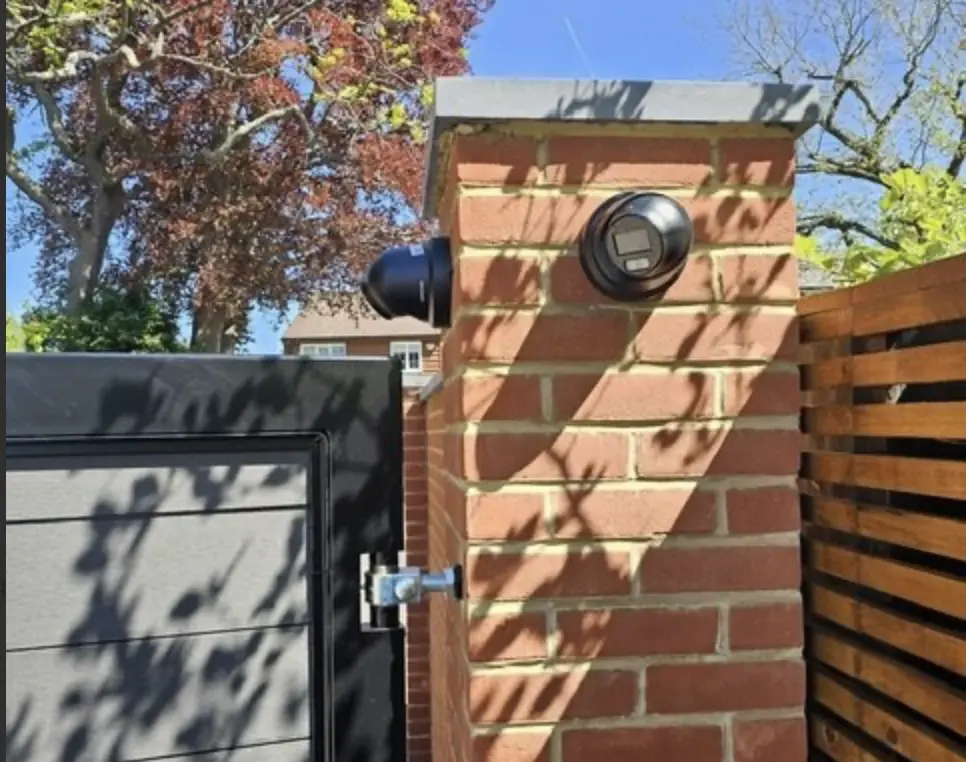
    Access control keypad

    Adding Surveillance Visibility

    Once the perimeter is secured, the next priority is improving visibility across the site.

    CCTV provides valuable awareness by allowing property owners or security personnel to monitor activity in real time while also recording evidence if an incident occurs.

    An effective CCTV system should eliminate blind spots and monitor high-risk areas such as:

    Modern CCTV systems offer much more than video recording.

    Advanced capabilities may include:

    Rather than installing cameras purely for coverage, they should be positioned strategically to maximise visibility while supporting investigations if an incident occurs.

    Combining strong perimeter protection with comprehensive CCTV significantly reduces security vulnerabilities.

    Learn more about our CCTV and alarms solutions for complete property protection.

    Detection & Alerts

    Visibility alone is not enough.

    A good security system should also detect suspicious activity and alert the appropriate people as quickly as possible.

    Intruder alarms remain one of the most effective methods of identifying unauthorised access.

    Depending on your property, detection systems may include:

    When triggered, alerts can be sent to:

    Many modern alarm systems also integrate directly with CCTV.

    For example, if an alarm activates overnight, cameras can automatically display the affected area, allowing security teams to verify the incident immediately.

    This combination reduces false alarms while enabling faster, more informed responses.

    Businesses may also benefit from zoned alarms, allowing different parts of the building to operate independently according to working hours or authorised personnel.

    Integrating Systems Over Time

    One of the biggest misconceptions about upgrading security is that everything must be replaced at once.

    In reality, many modern systems are designed to integrate with existing infrastructure.

    A phased approach allows organisations to spread costs while continuously improving protection.

    A typical upgrade journey might look like this:

    Phase One

    Phase Two

    Phase Three

    Phase Four

    By planning upgrades strategically, businesses avoid unnecessary replacement costs while ensuring every new component works together.

    Integration also simplifies day-to-day management by allowing CCTV, alarms, access control, and monitoring systems to operate as one connected solution.

    When planning a security system upgrade, choosing scalable technology helps protect your investment and supports future growth without requiring a complete redesign.

    Choosing the Right Upgrade Strategy

    Every property has unique security requirements, so there is no universal upgrade checklist.

    The most effective strategy focuses on reducing your highest risks first while building a security system that can evolve over time.

    As a general rule:

    Working with an experienced security specialist ensures upgrades are based on risk, operational requirements, and long-term value rather than simply replacing outdated equipment.

    At SCS Secure, we design bespoke security upgrade plans that align with your property, budget, and future objectives. Whether you require a single system enhancement or a fully integrated solution, our team can help you prioritise improvements that deliver the greatest impact.

    Frequently Asked Questions

    What should I upgrade first in security?

    For most properties, perimeter control and visibility should be the first priorities. Strengthening entry points and improving surveillance reduces opportunities for unauthorised access before intruders reach your building.

    Can upgrades be phased?

    Yes. Security upgrades are commonly completed in stages. This allows you to improve protection over time while spreading investment and ensuring each new system integrates with existing infrastructure.

    Do upgrades require full replacement?

    Not always. Many modern CCTV systems, alarm systems, and access control solutions can integrate with compatible existing equipment, reducing costs while improving overall security performance.

    Max Smith Picture

    Max Smith

    8th July 2026

    From studying for a Politics degree, Max took the less than obvious path into the environs of Security as a Locksmith back in 1985! Thirty plus years later, it’s a journey that has seen the achievement of NSI Gold accreditation for Intruder Alarms, Access Control & CCTV, plus the introduction of a sister company specialising in Gate Automation Solutions. With a wealth of both Engineering and management experience, Max has an active interest in the evolution of the Security Industry and its future direction.

    Website Built By Web Design SEO