Understanding Permitted Development Rights for CCTV
Permitted development rights allow certain types of building work and alterations to be carried out without submitting a conventional planning application.
However, permitted development rights come with conditions and limitations. They should not be interpreted as automatic permission to install any number or type of CCTV camera wherever you choose.
The restrictions can relate to factors such as the size, location and appearance of the installation. Permitted development rights may also be more restricted in designated areas.
This is particularly important if you are planning a larger CCTV installation or your property has a special planning or heritage status.
If there is any uncertainty, your local planning authority can advise whether planning permission is required for the proposed installation.
Do You Need Permission for CCTV on a Listed Building?
Installing CCTV on a listed building requires additional consideration.
Listed buildings are protected because of their architectural or historic importance, meaning alterations that affect their special character may require listed building consent.
Even relatively small security equipment can potentially affect the appearance or fabric of a historic building.
This could include:
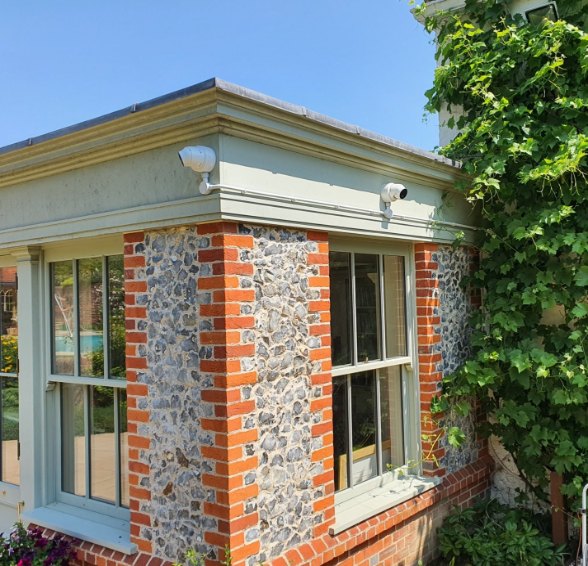
- CCTV cameras attached to external walls
- Mounting brackets
- Drilling into historic brickwork or stone
- External wiring and cabling
- Junction boxes and other equipment
- External lighting associated with the CCTV system
Some local authority guidance specifically identifies CCTV as the type of minor work that can require listed building consent where it affects the special character of the building.
Listed Building Consent vs Planning Permission
It is important to understand that listed building consent and planning permission are not the same thing.
An installation may not require a conventional planning application but could still require listed building consent because of the impact it has on the historic building.
Before installing CCTV on a listed property, contact your local planning authority or conservation officer. They can advise whether consent is required and whether changes to the proposed camera positions or installation method would make the system more appropriate.
A professional installer can also help identify less intrusive mounting locations and ways to minimise visible wiring and equipment.
What About CCTV in Conservation Areas?
Conservation areas are designated because of their special architectural or historic interest. Planning controls can therefore be more restrictive than they are for properties elsewhere.
Government planning guidance confirms that some permitted development rights are restricted in conservation areas.
This does not necessarily mean that every CCTV camera installed within a conservation area requires planning permission. However, you should check the specific restrictions that apply to your property before carrying out the work.
Particular consideration should be given to cameras positioned on:
- Prominent front elevations
- Historic façades
- Areas clearly visible from the street
- Architecturally significant parts of a property
Visible cabling, brackets and associated equipment should also be considered.
Careful positioning can help reduce the visual impact of a security system while still providing the coverage required to protect the premises.
Other Situations Where CCTV Planning Restrictions May Apply
Listed buildings and conservation areas are not the only circumstances where you may need to investigate planning requirements more carefully.
Additional restrictions could apply where:
- A property is subject to specific planning conditions
- Permitted development rights have been restricted
- The property is historically or architecturally significant
- You live in a flat or leasehold property
- The installation requires a separate pole or mounting structure
- An unusually large number of cameras is being installed
- The equipment significantly affects the property’s external appearance
- The CCTV system forms part of a larger building or security project
If you rent or lease your premises, planning permission is also separate from permission from your landlord or freeholder.
Checking these requirements before installation can help avoid the cost and disruption of having to relocate or remove equipment later.
Planning Permission Is Not the Same as CCTV Privacy Compliance
Receiving planning permission, or not requiring it in the first place, does not remove your responsibilities around privacy.
This is particularly important when CCTV cameras record beyond the boundaries of your property.
For domestic CCTV, the Information Commissioner’s Office (ICO) advises that if cameras capture someone else’s property, public areas or communal spaces, data protection law applies because the footage may contain other people’s personal information.
Where possible, cameras should therefore be positioned so they capture only the areas that genuinely need monitoring.
If your CCTV records beyond your property boundary, you may need to:
- Have a clear reason for using the cameras
- Avoid recording more than is necessary
- Make people aware that CCTV is operating
- Keep recorded footage secure
- Limit access to recordings
- Delete footage when it is no longer required
- Respond appropriately to requests from people captured by the system
Privacy masking and careful camera positioning can also help reduce unnecessary recording of neighbouring properties.
Businesses and organisations have additional responsibilities when operating CCTV and should ensure their surveillance systems comply with applicable data protection requirements.
How to Check Whether Your CCTV Installation Needs Permission
If you are unsure whether planning permission is required, carrying out a few checks before installation can save problems later.
Start by confirming whether your property is listed or located within a conservation area. You should also check whether any planning conditions or restrictions apply to the property.
If you rent or occupy a leasehold property, review your lease or speak with the landlord or freeholder before installing external equipment.
Next, consider the proposed CCTV system itself. Look at the number, size and positioning of the cameras, how they will be attached to the building and whether any additional structures are required.
Where there is uncertainty, contact your local planning authority. They can provide guidance based on your particular property and proposed installation.
For listed buildings or particularly sensitive properties, seeking advice before any drilling or permanent alterations are made is especially important.
Why Professional CCTV Installation Matters
Planning rules are only one consideration when installing CCTV. The effectiveness of the system ultimately depends on whether the cameras provide the right coverage.
Poorly positioned cameras can leave blind spots, capture unnecessary areas or produce footage that is not useful when an incident occurs.
Professional CCTV installation allows the system to be designed around the actual security risks of your property.
At SCS Secure, we provide CCTV solutions for residential properties, businesses, schools and larger commercial sites. Our systems can be designed around the individual requirements of the premises, from camera positioning and coverage through to monitoring and wider security integration.
A professional installation can help with:
- Strategic camera positioning
- Reducing security blind spots
- Minimising unnecessary views of neighbouring properties
- Discreet camera and cable placement
- Suitable equipment selection
- Reliable recording and footage access
- Integration with alarms and other security measures
- Designing systems around the specific requirements of the property
For properties requiring additional protection, CCTV can also be combined with CCTV monitoring and other security measures to create a more comprehensive solution.
Get Advice on Your CCTV Installation
For most standard CCTV installations, planning permission is not normally required. However, the situation can become more complicated when dealing with listed buildings, conservation areas, unusual camera installations or properties subject to additional restrictions.
Checking the requirements before installation is the safest approach.
It is equally important to remember that planning permission and privacy compliance are separate matters. Cameras should be positioned carefully, and any footage captured outside your property boundary must be handled appropriately.
If you are considering installing or upgrading CCTV, SCS Secure can design a bespoke solution around your property and security requirements.
From residential properties to schools and large commercial sites, our experienced team provides professional CCTV systems designed to deliver reliable surveillance and greater peace of mind.
Contact SCS Secure today to discuss your CCTV requirements and request a quote.
Frequently Asked Questions
Do I need planning permission for CCTV in the UK?
Planning permission is not normally required for a standard domestic CCTV installation, provided the system meets the relevant planning requirements. Different rules or additional restrictions may apply to listed buildings, conservation areas and certain unusual installations.
Can I install CCTV on a listed building?
You may be able to install CCTV on a listed building, but listed building consent could be required if the cameras, brackets, cabling or other equipment affect the building’s special architectural or historic character. Check with your local planning authority before carrying out the installation.
Do I need planning permission for CCTV in a conservation area?
Not every CCTV installation in a conservation area automatically requires planning permission, but permitted development rights can be more restricted. It is advisable to check with your local planning authority before installing external cameras.
Can CCTV cameras point towards the street?
A CCTV camera can sometimes capture areas beyond your property, but doing so may bring the system within data protection requirements. The ICO recommends limiting the area captured to what is necessary and positioning cameras away from neighbouring properties and public areas where possible.
Can my neighbour object to my CCTV camera?
Neighbours can raise concerns if they believe CCTV unnecessarily records their home, garden or private areas. Position cameras carefully and avoid capturing more footage than is necessary for your security purposes.
Should I check with the council before installing CCTV?
If your property is listed, situated in a conservation area, subject to planning restrictions or you are unsure whether your installation falls within permitted development rules, contacting your local planning authority before installation is advisable.