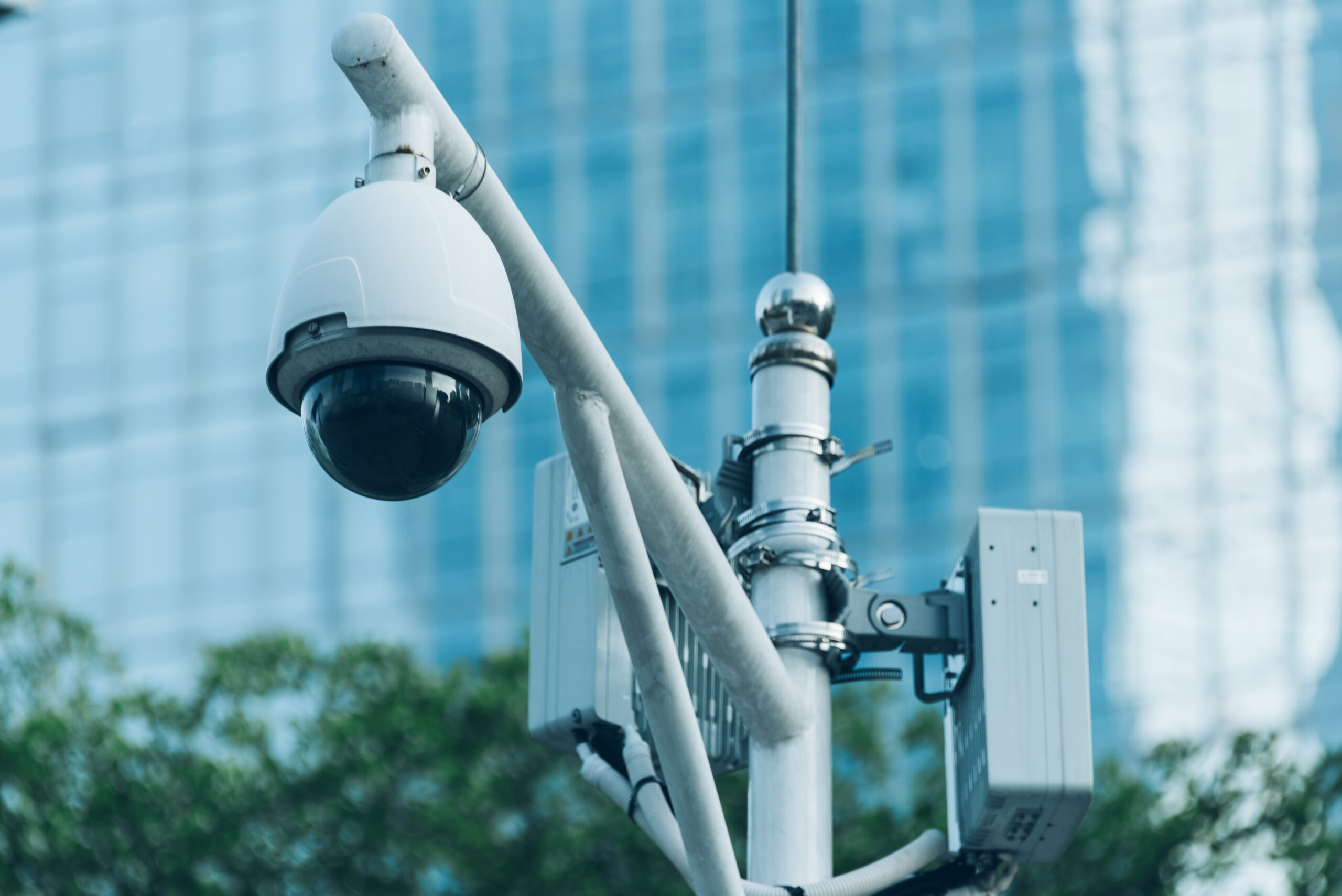
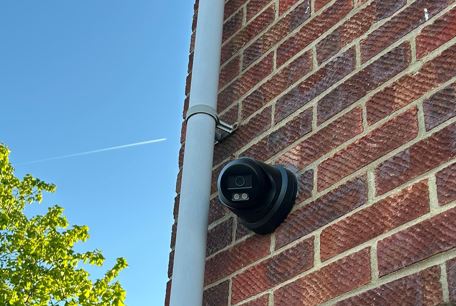
What Makes a Home CCTV System “The Best”?
Specifications can look impressive on a product page, but resolution alone does not make a camera effective. A useful system must achieve the purpose for which it was installed.
The most important questions are:
- Does it cover every vulnerable entrance and approach without creating blind spots?
- Can the cameras produce recognisable facial images, including after dark?
- Will the system record reliably if the broadband connection becomes unstable?
- Is footage stored securely for an appropriate period?
- Can you find and export a recording without difficulty?
- Are alerts accurate enough to be useful?
- Is the system protected against tampering and unauthorised online access?
- Has it been positioned with neighbours’ privacy and UK data protection rules in mind?
Police.uk advises positioning cameras so they can obtain good-quality facial images and recommends seeking advice from an accredited installer. This is a practical reminder that a camera pointing in roughly the right direction is not the same as a security system designed to capture useful evidence.
1. Professionally Installed Wired IP CCTV: Best Overall
A wired IP CCTV system connects cameras to a network video recorder, commonly called an NVR. Many systems use Power over Ethernet (PoE), allowing one cable to carry both power and data to each camera.
This is the best all-round option for homeowners who want reliable, high-quality protection rather than occasional clips.
Why it stands out
- Continuous power with no batteries to charge
- Stable video transmission that does not compete with household Wi-Fi
- High-resolution day and night recording
- Centralised local storage
- Secure remote viewing from a phone, tablet or computer
- Greater flexibility over lenses, camera styles and detection rules
- Easier integration with alarms, gates, intercoms and other security measures
A professional survey determines where identification-quality footage is required and where a wider overview is more useful. The installer can also select the appropriate lens, mounting height, field of view, night illumination and recording capacity for each location.
Who should choose it?
Wired IP CCTV suits detached and semi-detached homes, properties with side or rear access, homes with garages or outbuildings and anyone who wants a system designed to last.
2. Professionally Monitored CCTV: Best for Higher-Risk Homes
App alerts are useful, but they still rely on you being available, noticing the notification and deciding what to do. With monitored CCTV, eligible activations can be assessed by trained personnel at an Alarm Receiving Centre.
Monitoring can be valuable for:
- Homes that are regularly unoccupied
- Properties with isolated drives or grounds
- Households that travel frequently
- Sites containing high-value vehicles or equipment
- Homeowners who want an additional layer beyond self-monitoring
The key advantage is verification. A well-designed system can use defined detection areas and analytics to reduce unnecessary activations, while a monitoring service provides human assessment when a genuine event occurs.
SCS can connect suitable CCTV and intruder alarm systems to an Alarm Receiving Centre, creating a more coordinated security response than standalone cameras.
3. Hybrid CCTV: Best for Upgrading an Existing System
If a property already has serviceable CCTV cabling, a hybrid system may provide a cost-effective upgrade path. Existing infrastructure can sometimes be retained while cameras, recording equipment or selected parts of the system are modernised.
This can improve image quality, storage and remote access without the disruption of starting again. However, a survey is essential. Old cabling, connectors or power supplies may limit performance, and retaining poor infrastructure can undermine new equipment.
Hybrid CCTV is therefore best viewed as an engineered upgrade, not an automatic shortcut.
4. Wireless Mains-Powered Cameras: Best Where Cabling Is Difficult
Wireless cameras transmit footage over Wi-Fi but still usually require a power source. They can be useful in smaller properties or in areas where installing a data cable would cause disproportionate disruption.
Their main weakness is dependence on the wireless network. Distance from the router, thick walls, competing devices and external interference may affect connection quality. A professional installer can test signal strength and decide whether network improvements or a different system design would be more reliable.
Wireless should describe the connection method—not be treated as a guarantee of easier or better security.
5. Battery-Powered DIY Cameras: Best for Simple, Temporary Coverage
Battery cameras are accessible, quick to fit and useful for renters or homeowners who want to watch one limited area. They often include app alerts, two-way audio and cloud recording.
They also involve compromises:
- Batteries need charging or replacing
- Motion-triggered recording may begin after an event has started
- Frequent activity can shorten battery life
- Some important functions require a subscription
- Wi-Fi or cloud outages may affect access
- Incorrect positioning can produce excessive alerts or unusable images
For watching a parcel area, a DIY camera may be enough. For continuous coverage of several entrances, a wired and professionally installed system is generally more dependable.
6. Video Doorbells: Best as a Supplement
A video doorbell is useful for seeing callers, speaking to delivery drivers and reviewing activity close to the front door. It is not a substitute for a complete CCTV system.
Its view may not cover the driveway, side access, rear garden or a person approaching from outside its detection zone. Positioning is also constrained by the doorway. The best approach is often to use a doorbell as one part of a layered system rather than expecting it to protect the whole property.
Features to Look for in a Home CCTV System in 2026
Image quality that suits the scene
Higher resolution can provide more detail, but lens choice, distance, lighting, camera angle and storage settings all affect the final image. A well-positioned camera of an appropriate specification is more useful than a poorly positioned camera marketed on megapixels alone.
Effective night performance
Ask to see how the proposed camera handles the actual conditions around your home. Infrared illumination, low-light performance and supplementary lighting all have a role. Reflective walls, soffits, foliage and windows can also degrade night images if the camera is badly located.
Intelligent detection
Modern systems can distinguish between people, vehicles and general movement. Correctly configured detection zones and schedules help reduce alerts caused by branches, shadows, pets or traffic outside the area of concern.
Local storage with suitable capacity
An NVR keeps recordings on site and can continue recording without an internet connection. Storage should be calculated using the number of cameras, resolution, frame rate, recording mode and required retention period rather than guessed.
Secure remote access
Remote viewing should be convenient without weakening security. The National Cyber Security Centre recommends changing default passwords, keeping camera software updated and disabling remote access if it is not needed. Strong unique credentials and carefully configured network access are essential.
Privacy masking
Privacy masks can block parts of a camera view that do not need to be recorded, such as a neighbour’s window or garden. Professional commissioning makes these controls part of the system design rather than an afterthought.
Maintenance and support
Dirty lenses, altered vegetation, failing storage and changed camera angles can gradually reduce performance. Regular servicing checks that cameras remain focused and correctly directed and that recording, detection and playback still work.
Professional CCTV Installation vs DIY
| Consideration |
Professional installation |
DIY installation |
| System design |
Based on a property survey and identified risks |
Usually based on convenient mounting positions |
| Coverage |
Planned views with reduced blind spots |
Gaps and overlapping views are more likely |
| Image quality |
Lens, angle, height and lighting considered together |
Often selected mainly by advertised resolution |
| Reliability |
Fixed power, structured cabling and tested recording |
Greater reliance on batteries, Wi-Fi or cloud services |
| Privacy |
Camera views and masking configured deliberately |
Homeowner must interpret and apply the rules |
| Cyber security |
Devices and remote access commissioned correctly |
Default or weak settings may remain in place |
| Evidence retrieval |
Recording and export tested at handover |
Varies by app, subscription and storage method |
| Support |
Maintenance, fault diagnosis and system upgrades available |
Usually limited to manufacturer support |
| Upfront price |
Higher |
Lower |
| Long-term value |
Designed as a complete security asset |
Best for limited or temporary needs |
DIY products win on convenience and initial price. Professional systems win on design, resilience, accountability and long-term support.
The distinction matters because CCTV normally gets one chance to capture an incident. Discovering afterwards that a battery was flat, the subject was backlit, the face was too small or the recorder had stopped working is too late.
UK Home CCTV Rules: What Homeowners Need to Know
Home CCTV is legal in the UK, but how you use it matters.
Where possible, cameras should capture only your own property. If a system records beyond your boundary—including a public pavement, communal area or a neighbour’s property—data protection law applies.
According to the Information Commissioner’s Office, householders recording beyond their boundary should:
- Have a clear reason for using CCTV
- Avoid capturing more footage or audio than necessary
- Let people know CCTV is in use, normally with suitable signage
- Store recordings securely
- Delete footage regularly or automatically
- Be able to respond appropriately to requests from people recorded
- Consider objections and stop recording where there is no legitimate reason to continue
Audio recording is particularly intrusive and should not be enabled simply because a camera offers it. Camera positioning, privacy masking and sensible retention settings can help protect both security and privacy.
The ICO notes that its home CCTV guidance is currently under review following changes introduced by the Data (Use and Access) Act. Homeowners should check the latest official guidance before installation. A professional installer can help design a proportionate system, although the homeowner remains responsible for how their domestic CCTV is used.
How Many CCTV Cameras Does a Home Need?
There is no correct number for every property. A typical home may require cameras covering:
- The front approach and main entrance
- The driveway or vehicle area
- Side passages or gates
- Rear doors and accessible windows
- Garages, workshops or outbuildings
The objective is not to fit the largest possible number of cameras. It is to cover likely routes with purposeful views. One camera may provide an overview while another is positioned to capture identifying detail.
A site survey also accounts for rooflines, trees, lighting, access for cabling, opportunities for tampering and the privacy of surrounding homes.
How Much Does Home CCTV Cost in the UK?
The cost of a home CCTV system depends on:
- The number and specification of cameras
- Property size and construction
- Cable routes and installation access
- Recording and retention requirements
- Night-time lighting conditions
- Remote viewing and monitoring options
- Integration with alarms, gates or intercoms
- Maintenance and support
An off-the-shelf kit may have the lowest purchase price, but it is not directly comparable with a surveyed, installed and commissioned security system. Ask for a written proposal that explains the areas covered, equipment supplied, storage arrangement, installation work, handover and ongoing support.
Why Choose SCS for Home CCTV Installation?
Security Control Systems has designed, installed and maintained CCTV for more than 40 years. As an NSI Gold-approved company, SCS provides tailored residential systems rather than a one-size-fits-all camera package.
Homeowners can choose from:
- High-resolution IP CCTV
- Single-camera and multi-camera systems
- Local or remote recording
- Day and night viewing
- Mobile alerts and remote access
- CCTV monitoring
- Integration with intruder alarms, intercoms, gates and perimeter security
- Repair, annual maintenance and 24-hour support options
SCS serves homes across Berkshire, Reading, Buckinghamshire, Hampshire, Oxfordshire, Surrey, Middlesex and surrounding areas.
The Final Verdict
The best home CCTV systems in the UK for 2026 are not simply the products with the longest feature lists. They are systems that reliably capture useful images, cover the right areas, protect recordings and remain supported after installation.
Battery cameras and video doorbells have a place when the requirement is small or temporary. For long-term home protection, a professionally installed wired IP CCTV system is the best overall choice for most properties. Add professional monitoring where the risk or need for reassurance justifies it.
If you are comparing home CCTV options, SCS can survey your property and recommend a system built around its layout, your lifestyle and your security priorities.
Speak to the SCS security team on 0118 978 3381 or request a home CCTV consultation.
Frequently Asked Questions
What is the best CCTV system for a home in the UK?
For most homeowners, the best option is a professionally installed wired IP CCTV system with high-resolution day and night cameras, an NVR for local recording and secure remote viewing. The exact camera and lens choices should be based on a survey of the property.
Is wired or wireless CCTV better?
Wired CCTV is generally more reliable for permanent, multi-camera home security because it does not depend on battery charging or Wi-Fi for video transmission. Wireless cameras can be useful where cabling is impractical or the coverage requirement is limited.
Can home CCTV work without Wi-Fi?
Yes. A wired CCTV system can record footage locally to an NVR without Wi-Fi or an active internet connection. Internet access is normally required for remote viewing, mobile notifications and some cloud functions.
Is 4K CCTV worth it for a house?
It can be, particularly where the scene requires additional detail. However, resolution is only one factor. Lens choice, distance, lighting, camera position, compression and recording settings determine whether footage is genuinely useful.
Do I need permission to install CCTV at home in the UK?
Homeowners do not normally need general permission to install CCTV on their own property, although tenants and leaseholders should check their agreement and listed buildings or unusual installations may have additional restrictions. Data protection responsibilities apply if cameras capture beyond the property boundary.
How long should I keep home CCTV footage?
Keep footage only for as long as it is genuinely needed for the purpose of the system. There is no single retention period for every home. Storage settings should be proportionate and recordings should be deleted regularly or automatically.
Does CCTV reduce home insurance premiums?
Some insurers may consider approved security measures, but a discount is not guaranteed. Check with your insurer before buying a system and ask whether it requires particular equipment, certification, monitoring or maintenance.
How often should home CCTV be serviced?
SCS recommends annual servicing. A service should confirm that camera views, focus, lenses, detection, recording, storage, timestamps, remote access and footage export are all working correctly.