Plan the Security System in Layers
What are the main layers of physical security?
A physical security system can include several complementary layers:
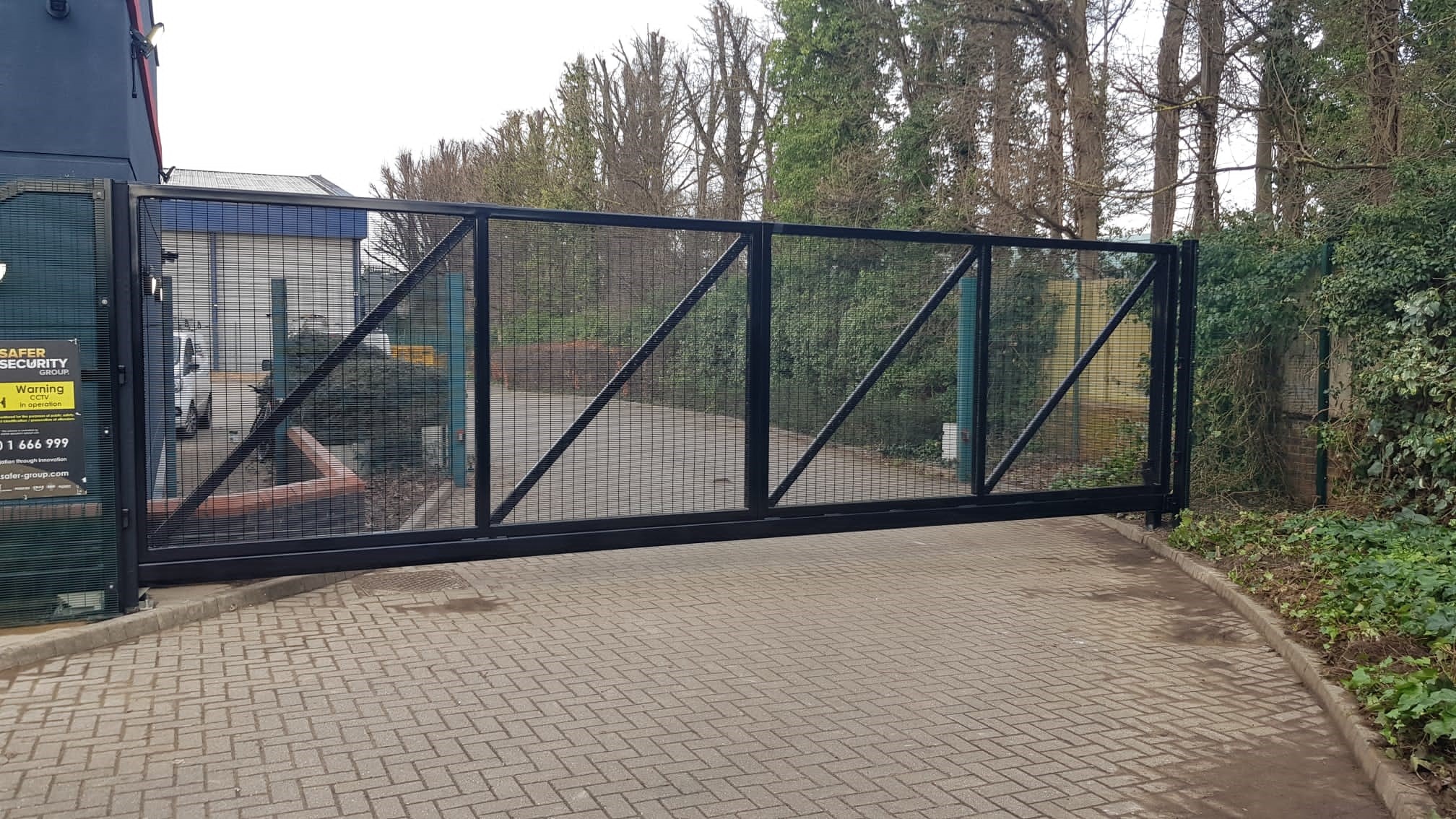
- Perimeter protection – fencing, gates, barriers and other measures protecting the site’s boundary.
- Surveillance – CCTV providing visibility across important areas.
- Access control – systems controlling who can enter particular areas.
- Intrusion detection – alarms and sensors detecting potential unauthorised access.
- Monitoring and response – processes for assessing an event and taking appropriate action.
The important point is that these layers should not operate in isolation.
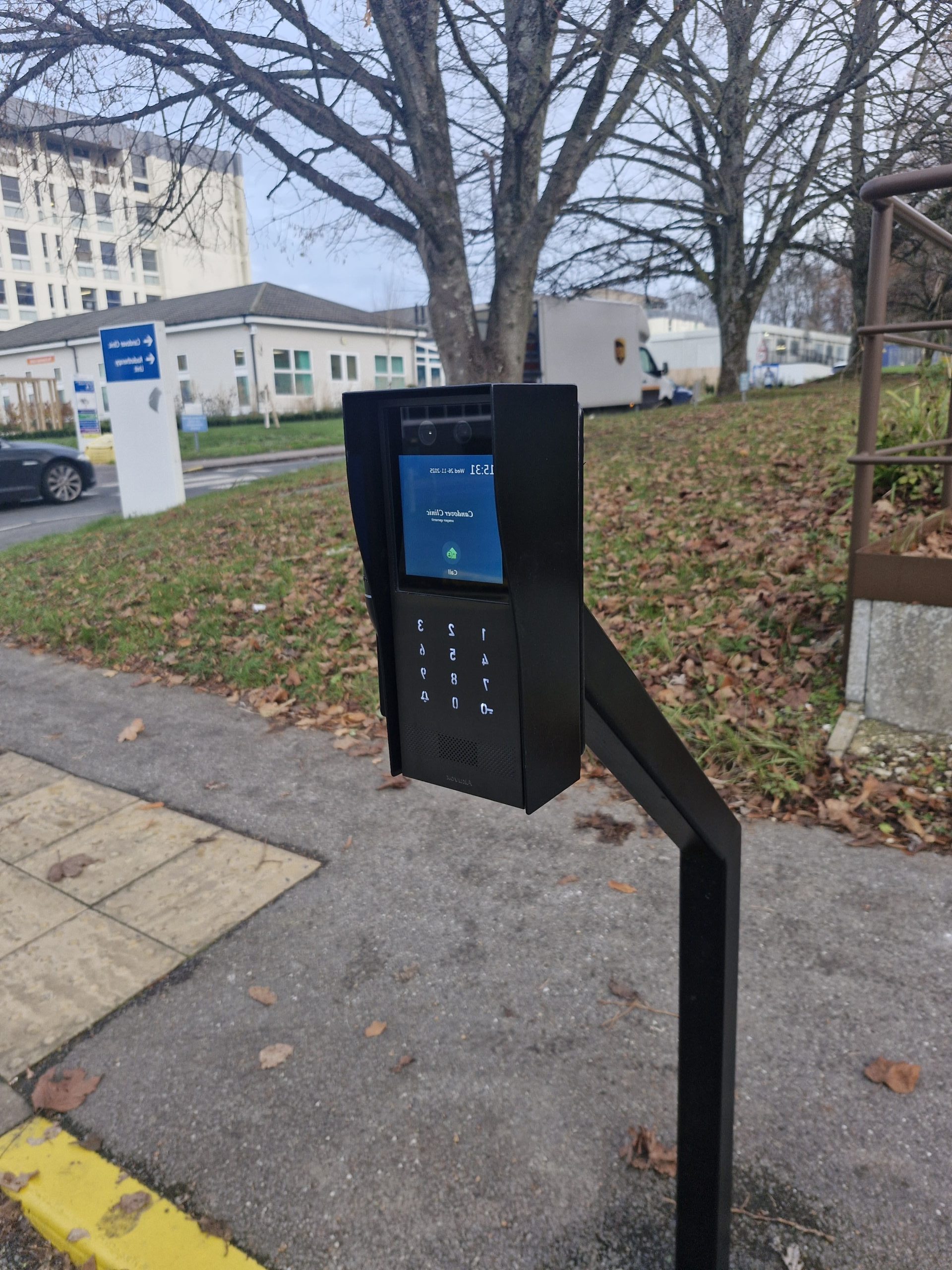
For example, a gate may physically control entry into a site, access control can determine who is permitted through it, an intercom can allow visitors to request entry and CCTV can provide visual verification.
This layered approach creates several opportunities to deter, detect or respond to unauthorised activity.
Planning CCTV Around the Building Layout
CCTV placement should be determined by what needs to be seen rather than simply where cameras are easiest to install.
A professional CCTV system should therefore consider the site’s physical layout, important assets, entrances, lighting conditions and potential obstructions.
Identify Critical Viewing Areas
Areas that may require CCTV coverage include:
- Main entrances and exits
- Vehicle gates
- Pedestrian gates
- Reception areas
- Car parks
- Loading bays
- Building perimeters
- Storage areas
- High-value assets
- Restricted areas
The purpose of each camera should also be clear.
A camera used to observe activity across a car park may require a different position and specification from one intended to identify people entering a controlled doorway.
Identify and Reduce CCTV Blind Spots
Buildings naturally create areas that can be difficult to observe.
Potential obstructions include:
- Corners
- Pillars
- Building extensions
- Trees and vegetation
- Storage containers
- Parked vehicles
- Outbuildings
- Changes in elevation
A site survey helps identify these blind spots before cameras are installed.
Camera placement can then be planned to provide useful coverage rather than relying on the number of cameras alone.
Consider Lighting and Environmental Conditions
Good CCTV coverage also depends on environmental conditions.
Bright sunlight, shadows, glare, darkness and changing weather can all affect the quality of surveillance footage. Outdoor camera positions should therefore consider how conditions may change throughout the day and across different seasons.
Lighting and surveillance should be considered together where appropriate rather than treated as completely separate parts of the site.
Plan Access Control Around How People Move
Where should access control be installed?
Access control should be positioned where movement between public, staff-only, restricted and higher-security areas needs to be managed.
Possible locations include:
- Main building entrances
- Staff entrances
- Internal restricted areas
- Server rooms
- Warehouses
- Storage areas
- Vehicle gates
- Barriers
- Turnstiles
SCS Secure’s access control systems can be applied to physical entry points including doors, gates, barriers, fences and turnstiles, allowing security to be designed around the way a site operates.
Think About People Flow, Not Just Doors
Access control planning is not simply about installing readers beside doors.
It should consider how different groups use the property, including:
- Employees
- Visitors
- Contractors
- Delivery drivers
- Maintenance teams
- Emergency services
For example, employees may require direct access to a staff entrance, while visitors may first need to use an intercom or report to reception.
Contractors may only require temporary access to certain parts of the building.
Designing access permissions around these real-world movements can improve security without creating unnecessary disruption to everyday operations.
Integrate Gates, Barriers and Perimeter Security
For many commercial and industrial sites, security begins before someone reaches the building.
Gates, barriers, fencing, railings and bollards can form part of the physical security infrastructure used to control movement around the site.
Separate Vehicle and Pedestrian Movement Where Appropriate
Sites with regular vehicle activity should consider how vehicles and pedestrians enter and move through the property.
Warehouses, business parks, schools and industrial facilities may have:
- Employee vehicles
- Visitors
- Delivery vans
- Heavy goods vehicles
- Contractors
- Pedestrians
Separating or controlling these movements can support both site security and safer traffic management.
SCS Secure’s security barriers, for example, can incorporate features including intercoms, access control readers, Automatic Number Plate Recognition (ANPR), CCTV and vehicle induction loops.
Connect Physical Barriers With Electronic Security
Physical and electronic systems can work together to create controlled entry points.
For example:
Gate → Intercom → Access Control → CCTV
A visitor arriving at a gate can request access using an intercom. CCTV can provide visual verification, while access control determines whether entry should be permitted.
For vehicle access, another configuration could be:
Barrier → ANPR/CCTV → Access Permission → Site Entry
The exact configuration should depend on the operational and security requirements of the property.
Consider Cabling, Power and Network Infrastructure
Physical security planning also needs to consider the infrastructure behind the security equipment.
Modern CCTV, access control and monitoring systems may depend on reliable power, data connections and network infrastructure.
Important considerations can include:
- Power availability
- Network connectivity
- Cable routes
- Underground ducting
- Equipment cabinets
- Network capacity
- Backup power
- Secure equipment locations
- Future expansion
Ignoring these requirements until installation begins can make projects more complicated than necessary.
Planning Security During Construction or Refurbishment
Security planning can be particularly valuable during a new construction project, refurbishment or major property upgrade.
At this stage, cable routes, power supplies, network infrastructure and mounting locations may be incorporated into the wider project.
Security specialists can also work alongside other contractors to identify appropriate locations for CCTV, controlled doors, gates and related infrastructure before the building layout is finalised.
This can help ensure security becomes part of the site’s design rather than something added after construction is complete.
Design for Integration and Future Expansion
Should CCTV, alarms and access control be integrated?
Where appropriate, integrating different security systems can create a more coordinated approach to detecting, verifying and responding to security events.
SCS Secure provides CCTV systems that can be integrated with intruder alarms and access control systems to create a broader security solution.
For example:
Unauthorised access attempt → Access event → CCTV verification → Alert → Security response
Instead of an isolated alert, an integrated system can provide additional information that helps determine what has happened.
Future requirements should also be considered during the planning stage.
A business may later:
- Extend its building
- Increase employee numbers
- Add additional entrances
- Expand a car park
- Install more cameras
- Create new restricted areas
- Add another building
- Introduce remote monitoring
Planning suitable infrastructure from the beginning can make these changes easier to accommodate.
Common Security Planning Mistakes
Some of the most common problems occur when security equipment is selected before the site has been properly assessed.
These can include:
- Installing CCTV without completing a site survey
- Leaving blind spots around buildings
- Protecting entrances while overlooking the perimeter
- Creating too many uncontrolled access points
- Treating CCTV, alarms and access control as separate systems
- Ignoring lighting conditions
- Forgetting network and power requirements
- Failing to plan for future expansion
- Overlooking emergency access requirements
- Choosing equipment before identifying actual security risks
Avoiding these mistakes starts with understanding what the property needs to protect and how its physical infrastructure affects those requirements.
When Should a Security Specialist Be Involved?
A security specialist should ideally be involved before major security decisions are finalised, particularly where several systems or physical security measures need to work together.
Professional security planning can be particularly useful when:
- Constructing a new building
- Refurbishing commercial premises
- Changing the layout of an existing property
- Expanding a warehouse or industrial facility
- Installing new gates or vehicle entrances
- Upgrading an ageing CCTV or alarm system
- Introducing access control
- Integrating previously separate security systems
Early involvement allows the physical environment, operational requirements and security technology to be considered together.
Build Security Around the Property, Not Around Individual Products
The most effective security solution is not necessarily the one with the greatest number of cameras, alarms or access readers.
It is one designed around the property, its risks and the way people use it.
A well-planned approach generally follows a logical sequence:
Physical infrastructure → Risk assessment → Perimeter → Access points → CCTV → Access control → Intrusion detection → Monitoring → Response
Each layer has a specific role, but the greatest value comes from designing those layers to complement one another.
SCS Secure has more than 40 years of experience installing and maintaining physical and electronic security solutions for homes, businesses, schools and commercial environments. As an NSI Gold approved installer, SCS can design, install and maintain CCTV, access control and intruder alarm systems, alongside gates, barriers, fencing and other physical security solutions.
Planning a new security system or upgrading an existing property? Contact SCS Secure to discuss a bespoke security solution designed around your premises, operational requirements and existing infrastructure.
Frequently Asked Questions
How do you plan a physical security system?
Start by assessing the property’s boundaries, entrances, vulnerable areas, critical assets and how people and vehicles move through the site. Appropriate measures such as CCTV, access control, alarms, gates and perimeter protection can then be selected according to the risks identified.
What should be considered when designing building security?
Building security planning should consider the property’s layout, perimeter, entrances and exits, vehicle access, restricted areas, lighting, CCTV visibility, power and network infrastructure, emergency requirements and potential future expansion.
Where should CCTV cameras be positioned?
CCTV cameras should be positioned according to the areas and activities that need to be observed. Common locations include entrances, exits, gates, car parks, building perimeters and high-risk areas. A site assessment can also identify potential blind spots and environmental factors affecting camera performance.
How does access control fit into physical security?
Access control manages who can enter a site or particular areas within it. It can be applied to doors, gates, barriers and other entry points and integrated with CCTV, intercoms and other security measures.
Why is perimeter security important?
Perimeter security creates an initial layer between a property and the surrounding environment. Measures such as fencing, gates, barriers and surveillance can help control access and provide opportunities to deter, detect or delay unauthorised entry.
Can CCTV, alarms, gates and access control work together?
Yes. CCTV, alarms, gates and access control can be integrated where appropriate. For example, an access control event or alarm activation can be supported by CCTV footage, helping operators verify what is happening and determine the appropriate response.