

access barriers

Rising Arm Barriers vs Gates: Which Is More Efficient?

Max Smith Picture

Max Smith

3rd June 2026

Rising arm barriers are generally more efficient for fast vehicle throughput, while gates are usually better for stronger perimeter security and controlled access. The right option depends on whether your priority is speed, physical protection, or a balance of both.

When planning site access, efficiency is not only about how quickly vehicles can enter and leave. It is also about how safely the system operates, how well it supports traffic flow, and whether it provides the level of protection your site actually needs. For some locations, a rising arm barrier is the most practical choice. For others, an automated gate offers better long term value because it adds a stronger physical layer of security.

Commercial premises, schools, industrial sites, residential developments, business parks, and restricted areas all have different access requirements. That is why understanding the difference between barriers and gates is so important before choosing a system.

How Rising Arm Barriers Work

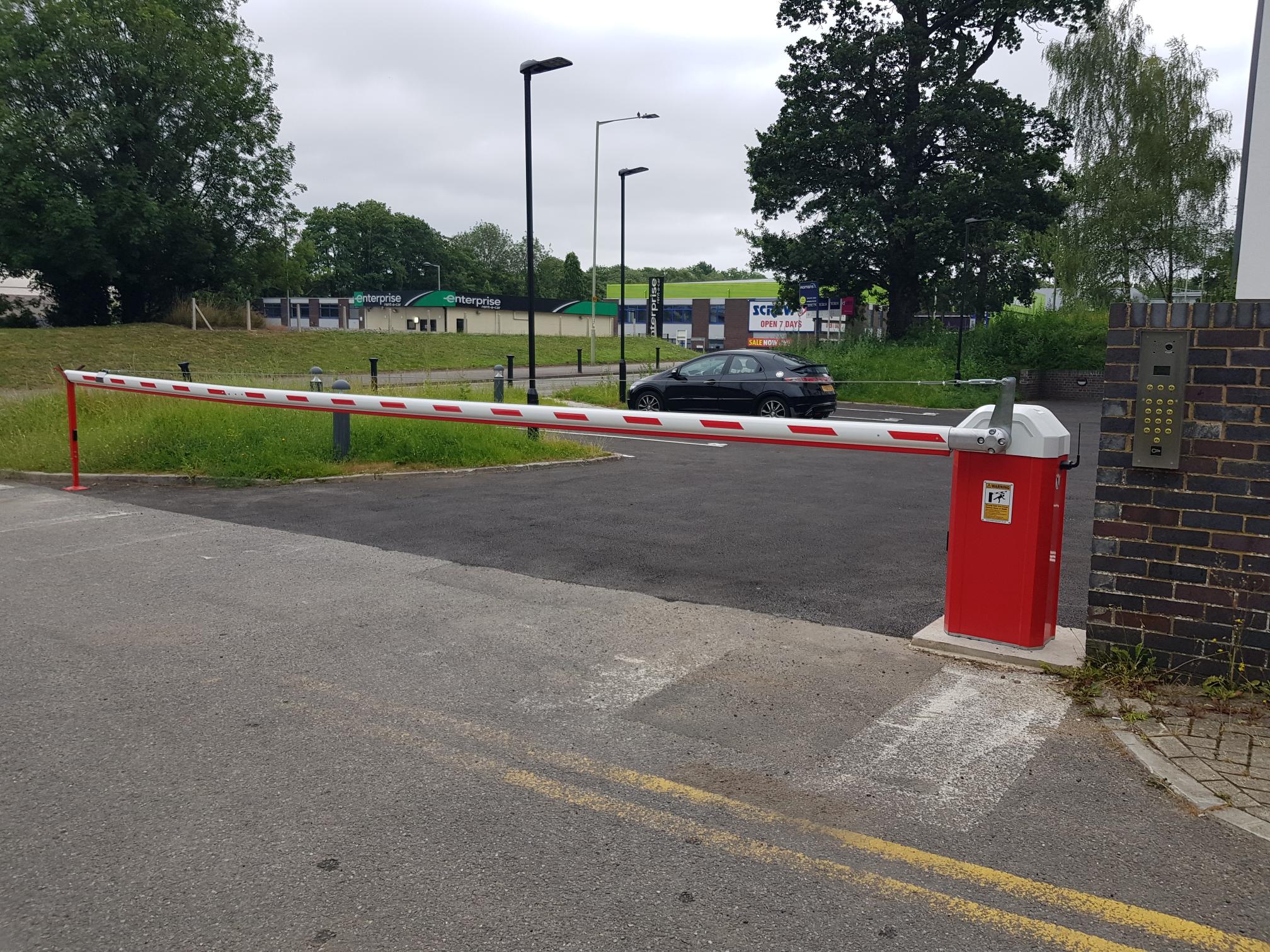
Rising arm barriers control vehicle access using a horizontal arm that lifts to allow entry and lowers to block it. They are commonly used in car parks, commercial entrances, logistics sites, staff access lanes, and locations where vehicles need to pass through quickly and repeatedly.

The appeal of rising arm barriers is their simplicity. They are designed for fast opening and closing, which makes them highly effective for sites with regular traffic movement. A barrier can be linked to fobs, access cards, ANPR systems, intercoms, keypads, induction loops, or remote controls, allowing entry to be managed in a quick and organised way.

Because the arm lifts vertically rather than swinging or sliding, the system usually takes up less operating space. This is useful where the site layout is tight or where traffic needs to move through a designated lane without delay.

However, while rising arm barriers are excellent for managing vehicle access, they do not create the same physical protection as a full gate. A vehicle barrier controls passage, but it does not fully close off the entrance in the same way that gates do. That means barriers are usually best suited to locations where throughput and access management are the main priorities.

For sites that need efficient lane control, professionally designed vehicle barriers can provide a dependable and practical solution.

How Automated Gates Differ

Automated gates also control access, but they do so with a solid or framed gate structure that physically closes off the entrance. Unlike a barrier arm, a gate forms a more complete boundary and provides a stronger visible and physical deterrent.

Gates can be configured in different ways, including swing, sliding, and bifold systems. They are often used on commercial sites, schools, residential developments, industrial premises, and properties where perimeter security is especially important.

The biggest difference is the level of closure. A barrier indicates whether vehicles may pass, while a gate creates a more secure physical obstacle. This makes automated gates more effective for sites where unauthorised access, perimeter strength, and controlled entry matter more than maximum traffic speed alone.

Automated gates can still be linked to access control systems such as intercoms, fobs, keypads, ANPR, and remote entry devices. They can also integrate with CCTV and wider security systems, giving organisations a more complete access solution.

That said, gates usually take longer to open and close than rising arm barriers. They may also need more space depending on the gate type and site layout. For example, swing gates need room to open, while sliding gates need run back space along the boundary.

If your site needs stronger entrance protection, automated gates are often the more suitable option.

Traffic Speed Comparison

When comparing traffic speed, rising arm barriers usually come out ahead. They are specifically designed for quick vehicle throughput, which makes them ideal for sites where queues need to be kept moving and access decisions happen rapidly.

A rising arm barrier can typically open and close faster than most automated gates because the moving part is smaller and lighter. This makes a noticeable difference at busy entrances such as staff car parks, delivery areas, private car parks, and commercial access lanes.

For high frequency traffic, this speed can improve convenience and reduce waiting times. It can also help prevent build ups at peak hours, which is especially useful on sites where many vehicles enter or leave within short periods.

Automated gates, while effective for security, usually operate more slowly because they involve larger moving structures. Sliding gates, swing gates, and bifold gates all have different operating speeds, but in general they are less focused on maximum throughput than rising arm barriers are.

That does not necessarily make gates inefficient. It simply means their efficiency should be judged differently. A gate may be slower, but it could still be the more efficient choice overall if it better suits the security needs of the site.

In simple terms, if your top priority is moving vehicles through an entrance quickly, vehicle barriers are often the more efficient option.
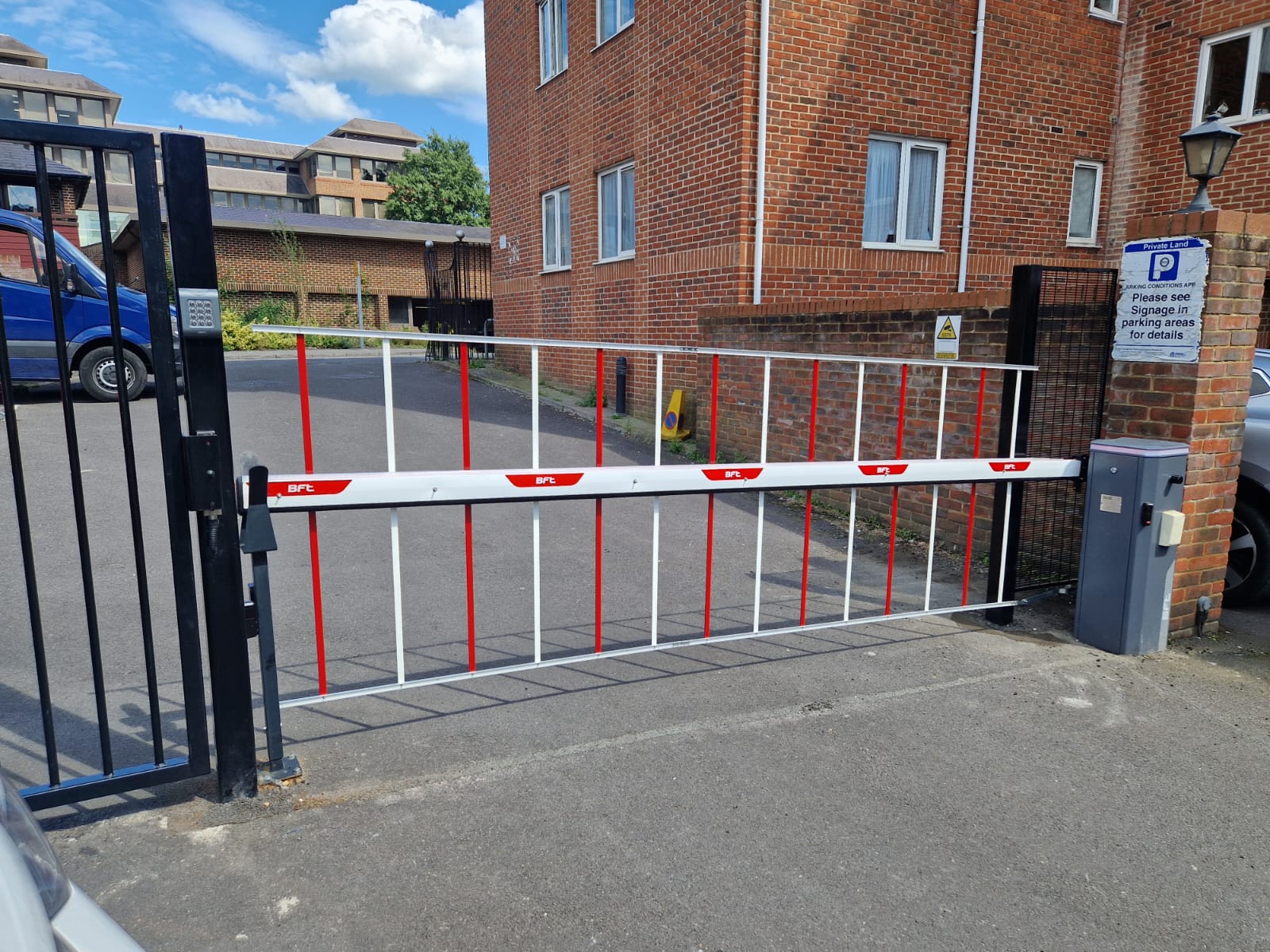
    Installation of a Physical Security Barrier
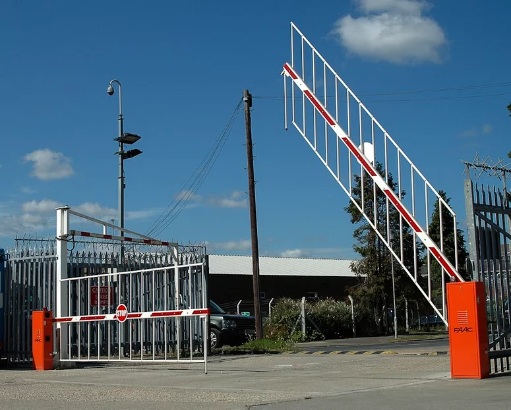
    Barrier lifting up

    Security Level Comparison

    When it comes to security level, automated gates usually offer stronger protection than rising arm barriers. This is because a gate forms a more complete physical barrier across the entrance.

    A rising arm barrier controls vehicle permission, but it does not fully secure the opening. It is effective at stopping compliant traffic and discouraging unauthorised entry, but it offers less resistance than a gate if someone is determined to gain access. A pedestrian may also be able to pass around a barrier unless other security measures are in place.

    An automated gate provides a much more substantial obstacle. It can help prevent both unauthorised vehicle and pedestrian access, create a stronger perimeter presence, and add a more secure physical boundary to the property.

    This makes gates the better choice for sites where access control needs to be backed by real physical protection. Schools, industrial facilities, private compounds, service yards, and higher security commercial sites often benefit more from gates because the security requirement goes beyond simple traffic management.

    That said, barriers still have a role in secure environments, especially when used as part of a layered approach. A barrier may be installed at the vehicle lane, while gates, fencing, bollards, CCTV, and access control create wider protection around the site.

    If physical entrance security is the main concern, automated gates will usually provide the stronger solution.

    Choosing the Right Option

    Choosing between rising arm barriers and gates depends on how your site works in practice. The right answer comes down to traffic levels, security priorities, available space, and the type of access you need to manage.

    A rising arm barrier is often the better choice if your site handles frequent vehicle flow and needs quick entry and exit. This is common in car parks, business parks, staff entrances, and controlled vehicle lanes where speed and lane discipline are more important than full perimeter closure.

    An automated gate is often the better choice if the entrance needs stronger physical protection. This is especially true for sites where unauthorised access presents a higher risk, where the boundary itself needs to be secured, or where the entrance must act as part of the perimeter rather than just a traffic checkpoint.

    There are also cases where both systems work best together. A site may use a gate for perimeter security and a barrier for internal traffic control. In some locations, a gate may protect the main entrance out of hours, while a barrier helps manage vehicle movement during the day.

    This layered setup can offer the best of both worlds. The barrier supports efficiency, while the gate supports security. Combined with intercoms, CCTV, safety sensors, and access control, it creates a more tailored and resilient system.

    The most efficient solution is not always the fastest one. It is the one that matches the actual demands of the site without creating unnecessary delay, weakness, or maintenance issues.

    Why Professional Site Assessment Matters

    Barriers and gates are not interchangeable on every site. Layout, traffic behaviour, approach angles, gradient, safety requirements, and user type all influence which system will work best.

    A professional assessment helps identify whether the site needs fast throughput, stronger physical protection, or a combination of both. It also ensures the chosen system is installed with the right controls, safety features, and supporting infrastructure.

    Without proper planning, a site may end up with a system that looks suitable on paper but performs poorly in day to day operation. A better specified solution improves both efficiency and long term reliability.

    FAQs

    Which opens faster?

    Rising arm barriers usually open faster than automated gates, which makes them well suited to sites with higher traffic flow.

    Which is more secure?

    Gates provide stronger physical security because they create a more complete barrier across the entrance.

    Can both be combined?

    Yes, many sites use both as part of a layered access strategy, with barriers managing traffic flow and gates strengthening perimeter security.

    Speak to SCS Secure About the Right Access Solution

    If you are deciding between barriers and gates, the best choice depends on what your site needs most from its access system. Some properties need quick and efficient vehicle throughput. Others need a stronger physical boundary. Many benefit from combining both.

    Visit SCS Secure to explore vehicle barriers and automated gates, and discuss the most effective solution for your site layout, traffic flow, and security requirements.

    Max Smith Picture

    Max Smith

    3rd June 2026

    From studying for a Politics degree, Max took the less than obvious path into the environs of Security as a Locksmith back in 1985! Thirty plus years later, it’s a journey that has seen the achievement of NSI Gold accreditation for Intruder Alarms, Access Control & CCTV, plus the introduction of a sister company specialising in Gate Automation Solutions. With a wealth of both Engineering and management experience, Max has an active interest in the evolution of the Security Industry and its future direction.

    Website Built By Web Design SEO