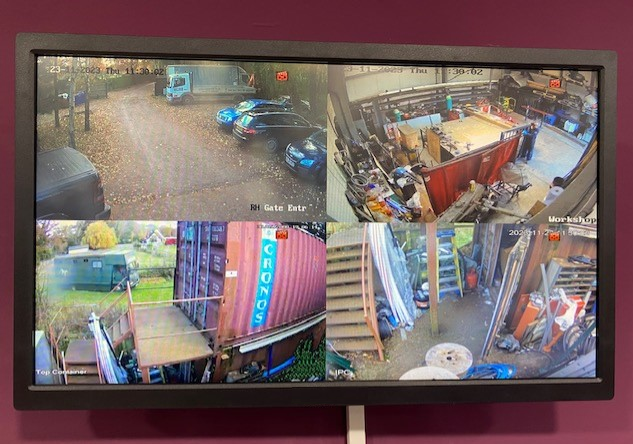
What Are the Benefits of Remote CCTV Monitoring for UK Businesses?
Remote CCTV monitoring offers several advantages for organisations looking to improve commercial property security.
Improved Security Outside Business Hours
Commercial premises can become more vulnerable when employees leave for the day.
Warehouses, offices, industrial facilities and construction sites may contain valuable equipment or stock that requires protection overnight.
Remote CCTV systems allow authorised personnel to check activity outside operating hours.
When combined with suitable detection and monitoring arrangements, they can also help identify potential intrusions before they go unnoticed for extended periods.
Faster Detection of Security Incidents
Traditional CCTV footage is often reviewed after an incident has occurred.
Remote monitoring systems with correctly configured alerts can notify designated personnel when potentially suspicious activity is detected.
This creates an opportunity to investigate an incident sooner.
Where professional monitoring is included, trained operators may verify alerts and initiate agreed response procedures.
Centralised Security Across Multiple Locations
Businesses operating several commercial properties may benefit from centralised CCTV management.
Instead of accessing separate recording systems at every location, compatible cameras can be managed through a shared platform.
This can be useful for:
- Retail chains
- Multi-site warehouses
- Commercial property portfolios
- Industrial estates
- Businesses with several offices
Centralised monitoring can improve operational visibility while allowing different users to receive access permissions appropriate to their responsibilities.
Potential Savings on Security Operations
Remote CCTV monitoring may complement physical security measures and reduce the need for certain routine site checks.
For example, a business might use remote viewing to investigate an alert before deciding whether someone needs to attend the premises.
However, remote CCTV is not always a replacement for security guards, patrols or other physical protection.
The most cost-effective approach depends on the property’s risk profile, operating hours and required response capabilities.
Better Evidence for Investigations
Recorded CCTV footage can provide useful evidence following theft, vandalism, property damage or unauthorised entry.
A properly configured system can help businesses review the sequence of events and provide relevant footage to authorised investigators or insurers when appropriate.
Recording quality, accurate timestamps, secure storage and appropriate retention settings are important considerations.
Remote CCTV Monitoring vs Traditional CCTV: What’s the Difference?
Both traditional and remote CCTV systems can record security footage. The main difference is how that footage can be accessed and whether additional monitoring features are included.
| Feature |
Traditional CCTV |
Remote CCTV Monitoring |
| Video recording |
Yes |
Yes |
| Off-site viewing |
Depends on system |
Core feature |
| Mobile access |
Optional |
Commonly available |
| Automated alerts |
Equipment-dependent |
Often included |
| Professional monitoring |
Separate arrangement |
Available as an option |
| Multi-site access |
Varies |
Often centralised |
| Incident response |
Usually requires someone to review footage |
Can support earlier notification and escalation |
| Ongoing fees |
Depends on setup |
May include subscriptions or monitoring charges |
A traditional CCTV installation may be sufficient for businesses primarily concerned with recording incidents.
Remote CCTV monitoring may be more suitable for organisations requiring off-site access, automated notifications or coordinated monitoring across several properties.
The right choice depends on the business’s security risks and operational requirements.
Which UK Businesses Benefit Most From Remote CCTV Monitoring?
Remote monitoring can be adapted to different commercial environments.
Warehouses and Industrial Facilities
Warehouses often contain valuable stock, machinery and equipment.
Remote CCTV can help monitor loading bays, storage areas, vehicle entrances and perimeter access points.
When integrated with access control systems, surveillance can also support investigations into unauthorised entry.
Retail Shops and Commercial Centres
Retail businesses can use remote CCTV to monitor entrances, stockrooms and other appropriate security-sensitive areas.
For multi-site retailers, centralised access can make it easier for authorised managers to review incidents across different locations.
Offices and Commercial Buildings
Office buildings may require security coverage for entrances, reception areas, car parks and restricted-access zones.
Remote CCTV can support building security teams and work alongside electronic access control systems.
Construction Sites
Construction sites often contain valuable tools, machinery and materials.
Remote CCTV systems can provide visibility over site entrances, storage areas and vulnerable boundaries, particularly outside working hours.
Temporary or mobile surveillance solutions may be appropriate where permanent network infrastructure is unavailable.
Businesses Operating Multiple Premises
Organisations with several locations can benefit from consistent monitoring procedures and centralised visibility.
A compatible video management system may allow authorised personnel to access different sites without travelling between them.
How Much Does Remote CCTV Monitoring Cost in the UK?
The cost of remote CCTV monitoring in the UK depends on the size of the premises, the equipment required and whether professional monitoring is included.
There is no single price suitable for every commercial property.
CCTV Equipment and Installation
Initial costs depend on factors such as:
- Number and type of cameras
- Camera resolution and night-vision requirements
- Building size and layout
- Cabling and network infrastructure
- Video recording and storage capacity
- Installation complexity
- Integration with existing security systems
A small office may require only a few cameras, while a large warehouse or industrial facility could need a more extensive installation.
Monitoring and Subscription Fees
Some remote-access systems can be operated without a separate professional monitoring subscription.
Others require recurring fees for cloud storage, video management software, professional monitoring or technical support.
Monitoring costs may vary according to the number of cameras, monitoring hours, alert verification requirements and agreed response procedures.
Maintenance and Support
Commercial CCTV systems require ongoing attention to maintain reliable performance.
Maintenance may include camera inspections, cleaning, firmware updates, recording checks and network security reviews.
Regular servicing can help identify faults before they affect surveillance coverage.
Is Remote CCTV Monitoring Worth the Investment?
Remote CCTV monitoring can be worthwhile for businesses that need visibility outside operating hours, manage several premises or face significant security risks.
Before investing, consider the potential impact of theft, operational disruption, property damage and delayed incident detection.
A professional security assessment can help identify the most appropriate equipment and monitoring arrangement without paying for unnecessary features.
Is Remote CCTV Monitoring Legal in the UK?
Yes. UK businesses can use remote CCTV monitoring, provided their surveillance activities comply with applicable data protection and privacy requirements.
Where CCTV captures identifiable individuals, the UK General Data Protection Regulation (UK GDPR) and Data Protection Act 2018 will generally apply.
Businesses should consider the following requirements.
Establish a Lawful Purpose
Organisations need a legitimate and clearly defined reason for using CCTV, along with an appropriate lawful basis for processing personal data.
Security, crime prevention and protection of property may be relevant purposes, but surveillance must still be necessary and proportionate.
Display Appropriate CCTV Signage
People should be informed when CCTV surveillance is taking place.
Clear signage should identify the use of CCTV and provide appropriate information about the organisation responsible for the surveillance.
Protect Recorded Footage
Businesses should restrict CCTV access to authorised personnel and implement appropriate technical security measures.
These may include encrypted connections, strong authentication, access permissions and secure storage.
Establish a Retention Policy
CCTV recordings should not be retained indefinitely without justification.
The appropriate retention period depends on the purpose of the surveillance and the organisation’s documented requirements.
There is no universal retention period that applies to every UK business.
Respect Employee and Visitor Privacy
Workplace CCTV must be proportionate and transparent.
Businesses should avoid unnecessary monitoring of employees and should not ordinarily install cameras in areas where individuals have a high expectation of privacy, such as toilets or changing rooms.
A Data Protection Impact Assessment may be required where surveillance is likely to create a high risk to individuals’ rights and freedoms.
For detailed guidance, consult the Information Commissioner’s Office (ICO).
What Should Businesses Look for in a Remote CCTV Monitoring System?
Choosing the right system involves more than selecting cameras.
Businesses should evaluate the following features before installation.
Reliable Video Quality
Cameras should provide sufficient image quality for their intended purpose.
Consider lighting conditions, viewing distances, camera positioning and the level of detail needed for incident review.
Secure Remote Access
Look for encrypted connections, strong authentication, role-based permissions and reliable software support.
Multi-factor authentication should be enabled where available.
Intelligent Detection Features
Motion detection and video analytics can help reduce the need for constant manual viewing.
However, alert settings should be tested and adjusted to minimise unnecessary notifications.
Recording and Storage Options
Businesses should decide whether local, cloud or hybrid recording is most suitable.
Consider retention requirements, storage capacity, resilience and secure access to recordings.
Integration With Existing Security Systems
Remote CCTV can complement other commercial security technologies, including:
- Access control systems
- Intruder alarms
- Automatic security gates
- Vehicle access barriers
- Perimeter detection systems
Integrating compatible systems can help create a more coordinated approach to site security.
Clear Monitoring and Response Arrangements
If professional monitoring is required, confirm the operating hours, response procedures, service limitations and responsibilities of each party.
A system advertised as remotely accessible does not necessarily provide continuous human monitoring.
Maintenance and Technical Support
Choose equipment and installation arrangements that allow for regular maintenance, software updates and troubleshooting.
Reliable aftercare is particularly important for businesses that depend on CCTV for daily security operations.
Why Choose SCS Secure for Commercial CCTV Installation?
Choosing a commercial CCTV system requires careful consideration of the property layout, security risks and operational needs.
SCS Secure provides commercial security solutions for businesses seeking to improve protection across their premises.
Whether you are planning a new CCTV installation, reviewing an existing surveillance setup or exploring integration with access control and perimeter security, selecting the right equipment is an important first step.
A properly designed system should provide suitable camera coverage, secure recording, reliable access and practical features that support your security objectives.
Businesses considering remote CCTV monitoring should also establish whether self-monitoring is sufficient or whether a separate professional monitoring arrangement is needed.
Looking to improve security at your commercial premises?
Contact SCS Secure to discuss your CCTV installation requirements and explore suitable remote viewing and security integration options.
Frequently Asked Questions About Remote CCTV Monitoring
Can I Monitor My Business CCTV From My Phone?
Yes. Many modern commercial CCTV systems allow authorised users to view live or recorded footage through compatible mobile applications. Remote access generally requires an internet connection and secure authentication. Available features depend on the cameras, recording equipment and software installed.
Does Remote CCTV Monitoring Require an Internet Connection?
Remote CCTV access normally requires an internet connection to transmit footage or alerts off-site. However, some systems can continue recording locally if the connection fails. Remote viewing and notifications may remain unavailable until connectivity is restored.
Can CCTV Cameras Be Monitored 24/7?
Yes. CCTV systems can record continuously, and professional monitoring services may offer 24/7 coverage. However, continuous recording is different from continuous human monitoring. Businesses should check whether a monitoring contract includes round-the-clock operator supervision, event-based monitoring or specific monitoring hours.
Can Remote CCTV Monitoring Work Across Multiple Business Locations?
Yes. Compatible CCTV systems can allow authorised users to monitor cameras across several business locations through a centralised platform. This is particularly useful for organisations managing warehouses, offices, retail outlets or commercial property portfolios.
Does Remote CCTV Monitoring Prevent Break-Ins?
Remote CCTV monitoring can help deter certain criminal activities, identify suspicious behaviour and support faster responses to security incidents. However, no CCTV system can guarantee that a break-in will be prevented. Effective protection usually combines surveillance with appropriate physical security and response procedures.
Can Existing CCTV Cameras Be Upgraded for Remote Monitoring?
In some cases, yes. Existing CCTV equipment may support remote access through compatible recording devices, software or network upgrades. Older systems may require replacement components. A professional assessment can determine whether the current cameras and infrastructure are suitable.
How Much Does Remote CCTV Monitoring Cost in the UK?
Remote CCTV monitoring costs vary depending on the number of cameras, installation requirements, storage arrangements and monitoring services. Businesses may pay an initial equipment and installation cost, followed by optional software, maintenance or professional monitoring fees. A site-specific quotation provides a more reliable estimate.
Improve Your Business Security With the Right CCTV Solution
Remote CCTV monitoring gives UK businesses greater flexibility in how they oversee their premises and respond to security events.
From warehouses and retail shops to offices and multi-site commercial properties, the technology can provide secure remote access, automated notifications and better visibility over important areas.
However, effective security depends on more than the ability to view cameras from a phone. Camera placement, recording reliability, cybersecurity, privacy compliance and clear incident response procedures all play important roles.
For businesses considering a new installation or an upgrade, the best approach is to begin with a professional assessment of the property’s security requirements.
Contact SCS Secure today to discuss a commercial CCTV solution suited to your business.